Gas vs. Electric Range Problems: When to Call an Appliance Technician
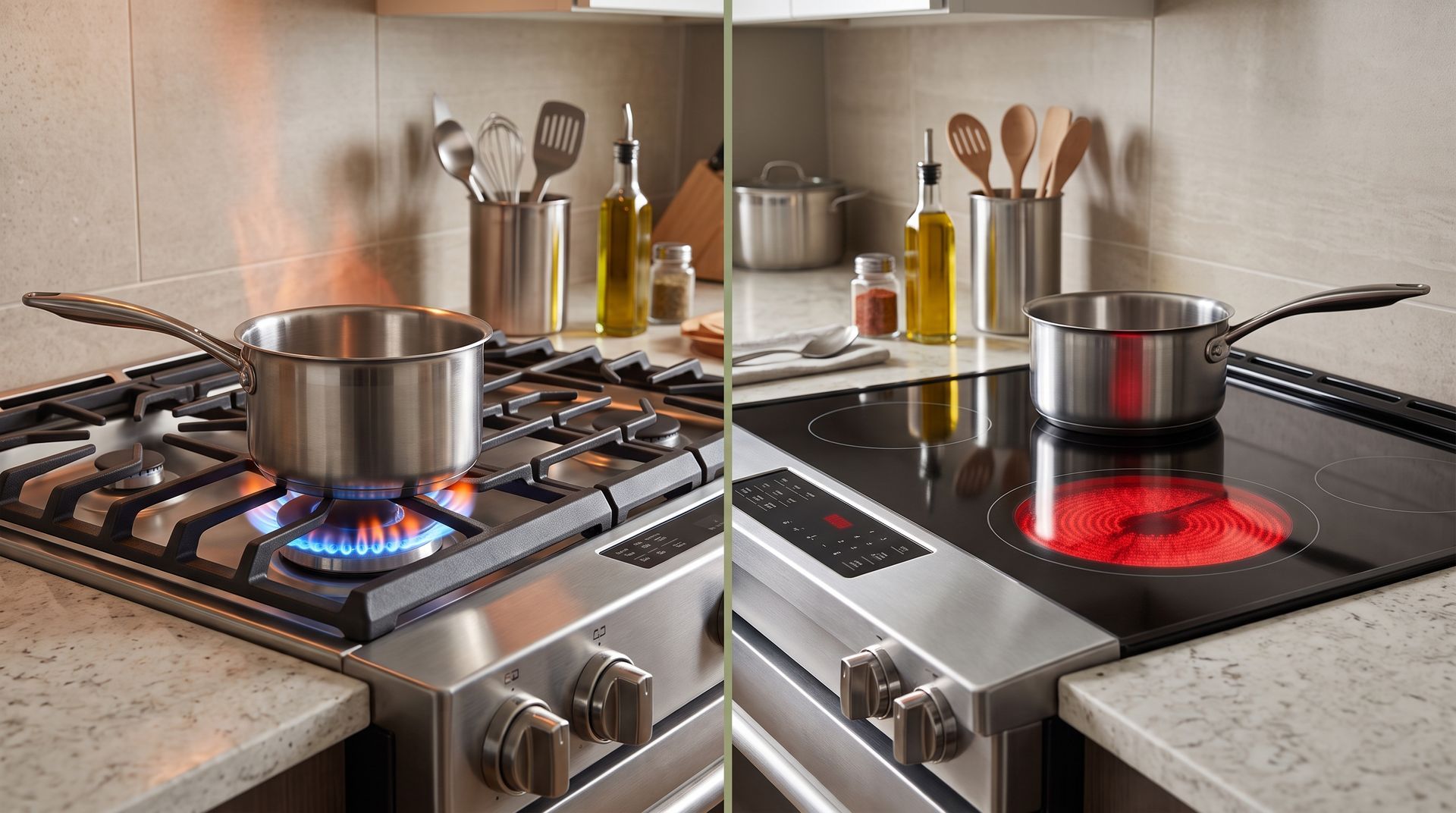
Gas and electric ranges can develop similar symptoms, but the causes are often very different. A gas burner that will not ignite may have an ignition or gas-delivery issue, while an electric burner that will not heat may involve the element, connection, switch, or electrical system.
If you need range repair in Oregon City, knowing which symptoms you can safely check and which require professional attention can help you respond appropriately. Gas and high-voltage electrical components should always be treated with caution.
What Problems Affect Both Gas and Electric Ranges?
Whether your range uses gas or electricity, several warning signs can indicate that something is not working correctly.
Common range problems include:
- Burners that will not heat
- Inconsistent burner temperatures
- Controls that do not respond properly
- Indicator lights that behave unexpectedly
- Damaged knobs or switches
- Unusual noises during operation
- Error codes on digital controls
- Burners that cannot maintain the selected setting
The underlying cause depends heavily on the type and design of the appliance.
Before troubleshooting, identify whether the problem affects one burner or several. A single malfunctioning burner may point to a localized component, while multiple failures can indicate a broader supply or control issue.
Why Won't My Gas Range Burner Ignite?
A gas range uses an ignition system to light the burner. If you hear clicking but do not see a flame, the burner cap, ignition components, or gas delivery may need attention.
Check the Burner Cap
Wait until the range is completely cool. If your model has removable burner caps, make sure each cap is correctly positioned according to the manufacturer's instructions.
A burner cap that has shifted out of place can interfere with normal ignition and flame distribution.
Food residue can also accumulate around accessible burner components. Clean only according to the owner's manual, and make sure components are completely dry before reassembling them.
If the burner still does not ignite after these basic checks, an igniter or another internal component may require diagnosis.
What If a Gas Burner Keeps Clicking?
Some clicking is normal while a gas burner is being ignited. Continuous clicking after the burner has lit or after the control has been turned off is different.
Moisture, food debris, ignition components, or control problems may contribute to repeated clicking.
If the range was recently cleaned or something boiled over, allow accessible components to dry according to the manufacturer's recommendations.
Persistent clicking should be inspected rather than ignored, particularly if the burner also has trouble lighting.
Why Won't an Electric Range Burner Heat?
Electric ranges rely on electrical heating components rather than a gas flame.
Depending on the design, a burner that does not heat may have a problem involving:
- The heating element
- Burner connection
- Infinite switch
- Wiring
- Control system
- Electrical supply
If only one burner has stopped working while the others operate normally, the problem may be limited to that burner or its controls.
Do not remove panels, access wiring, or attempt electrical testing unless you have the appropriate training. Electric ranges operate with high voltage and require proper safety procedures during diagnosis.
Why Is My Electric Burner Too Hot or Too Cool?
A burner that heats but cannot maintain the selected level may also require repair.
You might notice that food burns even at a low setting, the burner stays hotter than expected, or the temperature changes unpredictably.
Possible causes can include a burner control switch, heating component, sensor, or electronic control issue, depending on the range design.
Repeated temperature-control problems should be professionally diagnosed rather than managed by continually adjusting the setting.
When Is a Range Problem a Safety Concern?
Some symptoms require more caution than ordinary performance issues.
Stop using the affected appliance and seek appropriate help if you notice:
- A gas odor
- Sparking from an unexpected location
- Smoke from electrical components
- Scorched wiring or connections
- A burner that cannot be turned off normally
- Controls that become unusually hot
- Repeated circuit breaker trips
If you smell gas, do not continue troubleshooting or operate nearby electrical switches. Leave the area and follow the emergency instructions provided by your gas utility or local emergency services.
Appliance repair can address equipment faults after any immediate gas or electrical hazard has been handled safely.
When Should You Call for Range Repair?
Professional diagnosis is appropriate when simple manufacturer-approved checks do not restore normal operation.
Consider scheduling range repair if:
- A burner repeatedly fails to ignite
- An electric element does not heat
- Burner temperatures are inconsistent
- Clicking continues unexpectedly
- Controls do not respond correctly
- Error codes repeatedly appear
- Multiple burners stop working
- The same problem keeps returning
A technician can isolate the faulty component and determine whether the problem involves the ignition system, heating element, burner control, wiring, switch, or electronic controls.
Frequently Asked Questions About Range Repair
Why does my gas range click but not light?
A misplaced burner cap, moisture, debris, ignition problem, or gas-delivery issue may prevent ignition. Check accessible burner components according to the owner's manual. Persistent problems require professional diagnosis.
Why is one electric burner not heating?
A failed heating element, connection, switch, wiring issue, or control problem may be responsible. Because electric ranges use high voltage, internal electrical diagnosis should be handled carefully by a qualified technician.
Why does my range burner heat unevenly?
Uneven or unpredictable heat can result from a burner component, control switch, sensor, connection, or electrical problem. Recurring temperature issues are a reason to have the appliance inspected.
Should I use a range if I smell gas?
No. Stop using the appliance, leave the area, and follow the emergency guidance provided by your gas utility or local emergency services. Do not attempt to diagnose a suspected gas leak yourself.
Schedule Range Repair in Oregon City
Gas and electric ranges use different systems, but both require reliable burners and controls for everyday cooking. If basic checks do not resolve ignition, heating, or temperature-control problems, professional diagnosis can identify the underlying cause.
Integrity Appliances LLC provides residential and commercial kitchen appliance repair in Oregon City, including service for gas and electric cooking appliances.
If you need range repair in Oregon City, call (503) 750-3582 or request appliance repair service.
Recent Posts